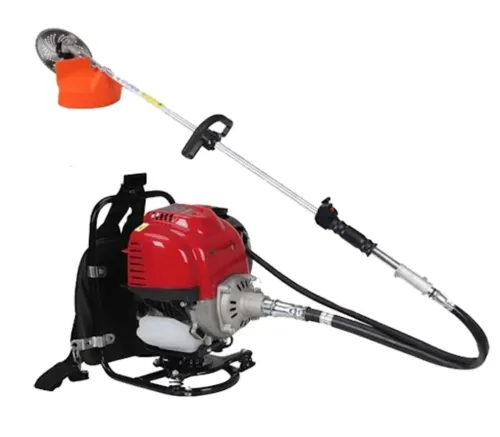

Cutting rice is only half the harvest job: a bare brush cutter can leave stalks scattered across muddy ground, adding raking, bending and bundling after every pass. You will learn how the gatherer forms manageable windrows, when crop and field conditions suit it, and which attachment details determine whether it saves work or creates clogging and grain loss.
Key takeaways
- Set cutting height below the panicle zone without digging into wet soil.
- Match the pass direction to crop lodging and the desired windrow position.
- Count gathering, lifting and tying time—not only cutting speed.
- Confirm shaft, guard, mounting points and spare-part support before purchase.
What a Paddy Gatherer Adds to a Brush Cutter
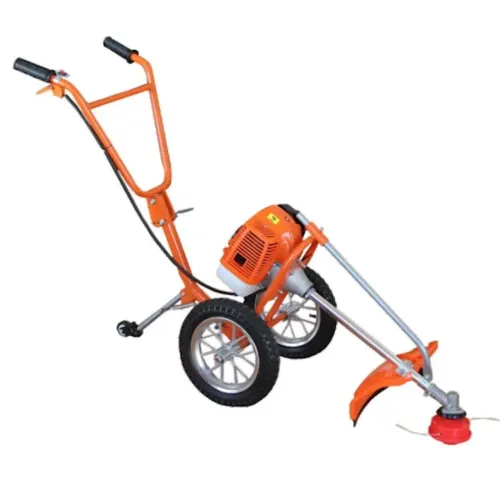
A paddy gatherer adds a guided collection stage immediately after cutting. A guide, rake or reel with flexible fingers lifts the fallen stalks, while the guard keeps material near the gathering side; the collection arrangement lays it in a row or forms a partial bundle within reach.
Set the reel speed and finger position correctly: excessive speed can strike panicles, while insufficient feeding leaves stalks scattered.
A paddy gatherer attachment may come as part of a complete brush cutter with gatherer, arrive as a separate accessory, or require fabrication for a particular shaft, blade, arbor and mounting point. Do not assume universal fit.
Confirm the shaft diameter, gearbox, guard clearance, blade rotation, attachment weight and handle balance before installation; an improvised mount can create vibration, slipping or contact between rotating parts.
| Equipment | Result in the rice cutting and collection workflow | Work still required |
|---|---|---|
| Standard brush cutter | Cut stalks spread across the field | Rake, search, bend, bundle and carry them |
| Brush cutter with gatherer | Cut stalks move into a consistent, reachable windrow or partial bundle | Tie or gather the windrow and move it to collection |
| Reaper-binder or combine | Dedicated conveying and accumulation, with broader automation | Follow the machine’s separate binding, threshing or unloading process |
The gatherer performs cutting plus initial swathing, not threshing, cleaning or bagging. Grain still needs separate threshing, separation, cleaning and packing operations.
Choose the Crop Condition and Set the Cutting System
Clean cutting is most likely in upright or lightly lodged rice, where stalks reach the blade and the gatherer can lift them into a row. Heavily lodged paddy is harder: stalks lying in different directions can pass below the blade, wrap around the reel or be pushed into soil.
| Crop condition | Cutting decision | Main risk |
|---|---|---|
| Upright rice | Cut with the gatherer aligned to the standing crop | Scattering if forward travel is too fast |
| Lightly lodged rice | Cut against the lean or along the lodging pattern | Missed stems and uneven windrows |
| Heavily lodged rice | Test a short pass before committing to the field | Wrapped stalks, soil contact and uncut patches |
| Near 20–25% grain moisture | Balance drying effort against field losses | Wetter rice grain moisture increases drying work; delaying harvest increases shattering |
Wait for surface dew to dry when the crop and weather allow, because wet straw wraps around the spindle, reel and guard. Do not treat wet cutting as an absolute ban if waiting would leave mature panicles exposed to shattering.
Set the machine before entering the field:
- Fit a manufacturer-approved metal grass or brush blade for fibrous stems; do not substitute nylon line.
- Set the cutting height for rice harvesting from the lowest productive panicles and the actual ground surface, not the cutter-head diameter. Too high leaves stems; too low picks up soil and stones.
- Adjust the gatherer for row spacing, plant height, crop density and lodging.
- Match the blade diameter, guard, arbor and speed to the manufacturer’s specification.
Use a Pass Pattern That Produces Clean Windrows
Clean rice windrows come from a repeatable paddy cutting method, not maximum engine speed. Set the standing crop alignment before you start, then keep every pass moving material toward the same accessible side.
1. Stop the engine and inspect the blade, arbor, spindle, guard, gathering fingers and reel. Remove wrapped straw, check fasteners and confirm that the blade and guard match the attachment specification; hidden stones, wire and mud can turn a small defect into vibration or blade failure.
2. Position the gathering side toward the standing crop. Set the cutter to take stalks from the lowest productive panicles without scraping the actual ground surface, because excessive contact pulls mud and weeds into the straw.
3. Choose the travel direction from the crop’s lean. Cut against a uniform lean, or follow the lodging pattern when stalks lie in different directions; a fixed direction can leave low stalks uncut or push them into soil.
4. Start at a controlled forward speed and make the first pass place stalks consistently. Dense rice needs slower travel, not simply higher throttle, so the blade and fingers have time to cut and feed the stems.
5. Match gathering reel speed to crop density and travel speed. Excessive speed strikes panicles and increases shatter; insufficient speed leaves cut stalks scattered instead of forming rice windrows.
6. Overlap the previous cut just enough to eliminate uncut strips. Collect or tie the first windrow before the next pass reaches it, and avoid crossing finished swaths, especially on soft ground where wet stalks drag through mud and pick up soil.
Measure the Labour Saving Beyond the Cutting Pass
The main saving is in collection labour, not necessarily in the cutting pass. Compare the full chain: cutting versus collection, because a bare brush cutter leaves much of the second task to people working behind it.
1. Bare brush cutter: cut stalks, search for scattered stems, perform manual raking and bundling, bend repeatedly, then carry bundles to a collection point.
2. Brush cutter with gatherer: cut the crop, place stalks in a windrow or partial bunch, tie or gather the material, then move it to the collection point.
3. Count the time spent walking back for missed stalks, lifting muddy material and reforming loose bundles. That is where the attachment earns its value.
4. Record one complete field cycle, including tying and carrying, rather than timing only the blade’s forward movement. A faster cutting pass can still produce slower harvesting if the windrow is scattered.
The useful capacity of a handheld paddy harvester depends on yield, lodging, mud, bunds, irregular boundaries, bundle size and operator fatigue—not engine displacement alone. A large crop or wet, broken plot can reduce output sharply.
The attachment does not continuously convey or accumulate crop. The operator still carries or supports the machine, controls each pass and moves gathered bundles, unlike a self-propelled reaper-binder or combine.
In a reaper-binder comparison, the handheld unit has lower throughput but can manoeuvre around narrow strips, bunds and irregular edges where a wheeled machine risks damaging soil or standing rice.
Check Attachment Compatibility, Safety and Support Before Buying
Treat a paddy gatherer as a complete machine, not a universal add-on. A paddy gatherer buying checklist must show what it fits, what it can cut and how its capacity was measured.
1. Ask for the cutting width, working-height range, crop-condition limits, supported blade type and diameter, attachment weight, rated engine range, harness arrangement and spare-parts list. Require a field capacity definition: cut area per hour, gathered area per hour or material delivered for threshing. These figures are not interchangeable.
2. Confirm that the complete assembly is rated for the added rotating mass. Check the shaft, clutch, gearbox, handle position, guard, arbor and maximum speed against the attachment maker’s specifications; do not mix unrelated components.
3. Fit the gatherer before judging balance. Stop if you feel excessive vibration, because it indicates a setup, alignment or damaged-part problem rather than normal operation. Check that the blade guard and harness support the attachment without pulling the handle sideways.
4. Wear eye and hearing protection, long trousers and safety footwear. Adjust the harness so the cutter hangs securely, and stop the engine before clearing wrapped straw from the blade, spindle, reel or guard.
5. After muddy work, inspect the blade, spindle, gearbox lubrication, fasteners and guard. Mud and silica-bearing straw can hide damage, while concealed stones or wire can bend the spindle and increase vibration.
Importers of Agricultural Equipments can help you question attachment compatibility, manuals, spare availability and a practical field demonstration instead of accepting horsepower alone.
Related product
 | GASOLINE BRUSH CUTTER SAM-BC43 2 Stroke Crop Harvester Engine Type: Air Cooled, 2 Stroke Engine Power: 1.25kw/1.7HP Engine Displacement: 42.7cc Fuel Tank Capacity: 1.2Ltr Weight: 7.6kg View product → |
Frequently asked questions
What does a paddy gatherer add to a brush cutter?
It guides cut rice stalks toward one side and lays them in a row or partial bundle, reducing scattered material and repeated collection.
How should you set the cutting system for paddy?
Adjust the cutting height to clear the stalks while avoiding contact with the soil, then match the blade or cutting head to crop density and lodged stems.
Which pass pattern produces clean paddy windrows?
Use consistent, overlapping passes that place each cut strip beside the previous one, and change direction when lodged crop prevents the gatherer from feeding evenly.
How should you measure labour saving?
Record total time for cutting, gathering, lifting and bundling, then compare it with the same complete workflow using the existing method.
What compatibility checks matter before buying?
Check the brush cutter shaft, guard, attachment mounting points, cutting head, operator controls and availability of replacement fingers, guards and other wear parts.