
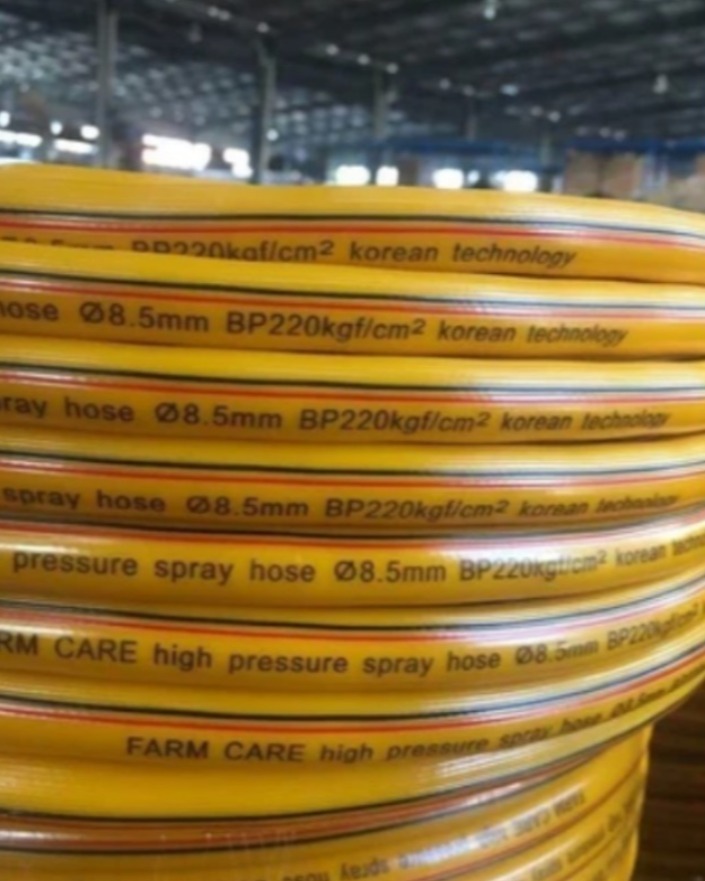
A Hose Pipe may look like one of the simplest pieces of agricultural equipment, yet an unsuitable hose can create frustrating problems. Poor flow, leakage, kinking, premature wear, and incompatible connections can all reduce the effectiveness of irrigation, pumping, spraying, and cleaning systems.
For farms, nurseries, landscaping businesses, and agricultural contractors in Bangalore and elsewhere in Karnataka, hose selection should be based on the complete application.
Start With the Required Diameter
Internal diameter influences how water moves through a hose.
A hose that is too restrictive for the connected equipment can contribute to pressure loss and reduced flow. At the same time, choosing a larger diameter without considering fittings and equipment connections may create compatibility problems.
Check the inlet and outlet specifications of the pump, sprayer, pressure equipment, or other system before choosing a hose.
Measure the Actual Distance
Buyers sometimes estimate length without considering the route the hose needs to follow.
Measure from the connection point to the farthest normal working position. Include extra distance required to move around obstacles, crop rows, landscaping features, buildings, and machinery.
Excessive unnecessary length can make handling more difficult and may influence system performance.
Consider Working Pressure
Not every Hose Pipe is designed for the same pressure.
A hose used for basic water transfer can have different requirements from one connected to higher-pressure equipment.
Always confirm the manufacturer's rated application and pressure specification. Using a hose outside its intended operating range can increase the risk of failure.
Evaluate Flexibility and Kink Resistance
Agricultural hoses are frequently dragged, coiled, uncoiled, and moved around corners.
Excessively stiff material can make handling inconvenient, while a hose that collapses or kinks easily may interrupt flow.
Users should look for a practical balance between flexibility, structural strength, and application requirements.
This can be particularly relevant for landscaping and gardening teams working around developed properties in Bangalore, where hoses often need to move around walls, pathways, trees, and planted areas.
Check Environmental Exposure
Outdoor equipment is exposed to demanding conditions.
Sunlight, heat, moisture, mud, abrasion, rough surfaces, and repeated movement can all contribute to wear.
A hose used occasionally in a protected garden does not face the same conditions as one used daily by an agricultural contractor.
Buyers should therefore consider expected service conditions when evaluating construction quality.
Inspect Fittings and Connections
A good hose can still perform poorly if the connections are incorrect.
Check coupling size, clamps, connectors, adapters, and sealing requirements.
Connections should fit securely without makeshift modifications.
Leaks not only waste water but can also reduce the performance of connected equipment.
Store the Hose Correctly
Proper storage can extend usable life.
After use, drain remaining water where appropriate and coil the hose without severe twists. Avoid leaving it unnecessarily exposed to damaging conditions.
Regularly inspect the hose for cracks, bulges, damaged fittings, abrasion, and leaks.
Beacon India supplies agricultural and outdoor equipment for customers with different water transfer, irrigation, spraying, and maintenance requirements. Buyers in Bangalore can evaluate hoses alongside the equipment they will connect to rather than treating the hose as an isolated accessory.
Choosing the right Hose Pipe comes down to matching diameter, length, pressure rating, material characteristics, connections, and operating environment. A little attention at the buying stage can prevent recurring flow and handling problems during everyday agricultural work.


