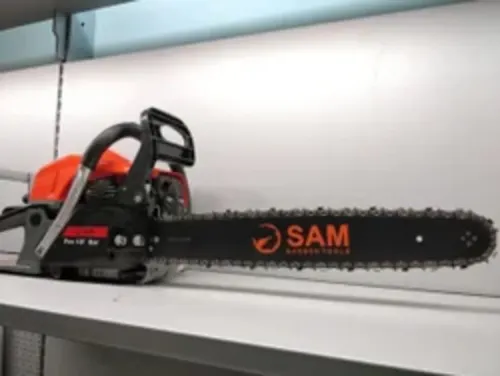
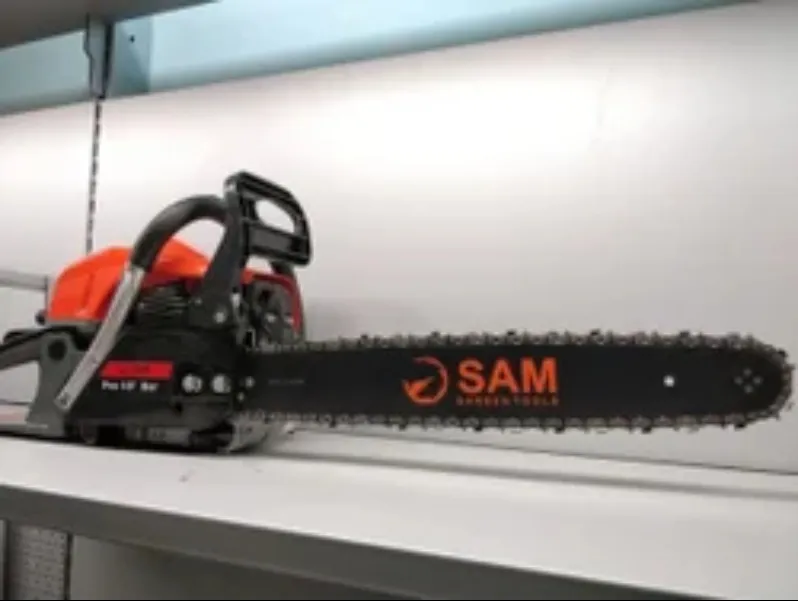
A Chainsaw can make suitable cutting tasks significantly more efficient, but it is also a powerful machine that requires careful selection, proper training, and responsible operation.
Agricultural users may need cutting equipment for appropriate tree maintenance, farm management, horticultural work, and property maintenance. Professional landscapers may also use chainsaws as part of managed outdoor services.
For buyers in Bangalore and elsewhere in Karnataka, selecting a chainsaw should begin with the intended cutting work and the operator's experience.
Define the Typical Cutting Requirement
Chainsaws are available in different sizes and configurations because cutting requirements vary.
Before purchasing, consider the typical material diameter, frequency of use, operating environment, and whether the equipment will be used occasionally or professionally.
Selecting an unnecessarily large machine can make handling more demanding. Equipment that is too small for the intended work may also be unsuitable.
The objective is to match the machine to realistic cutting requirements.
Consider Guide Bar Size Carefully
Guide bar dimensions are an important part of chainsaw selection.
The appropriate size depends on the machine design and intended cutting application. Buyers should follow manufacturer recommendations rather than fitting unsupported combinations.
A larger bar is not automatically an advantage. It can influence balance, handling, and power requirements.
Check Safety Features
Safety should be a central buying consideration.
Depending on the model, equipment may incorporate features designed to support safer operation. Buyers should understand these features and read the manufacturer's operating instructions thoroughly.
A Chainsaw should never be used without appropriate training and personal protective equipment.
Users should also understand kickback hazards and safe cutting practices before operating the machine.
Think About Weight and Handling
Working weight becomes important during repeated cutting.
Consider how the machine feels when fully prepared for operation. Handle position, balance, vibration characteristics, and control placement can affect operator fatigue and control.
Professional users should select equipment suitable for the people who will actually operate it.
Ask About Chain Maintenance
The cutting chain requires regular attention.
Users need to understand correct chain tension, lubrication, sharpening requirements, inspection procedures, and replacement criteria.
A dull or poorly maintained chain can reduce cutting efficiency and create additional operating problems.
Only compatible chains and guide components should be used.
Consider Local Service Requirements
Outdoor power equipment needs maintenance.
Air filters, spark plugs, chains, guide bars, lubrication systems, starter components, and other parts may require periodic inspection or replacement depending on the model.
For customers in Bangalore and Karnataka, access to suitable consumables and replacement parts should therefore form part of the buying decision.
Choose a Supplier That Can Explain the Equipment
Beacon India supplies agricultural and outdoor power machinery for customers with different maintenance and cutting requirements. Buyers can review equipment according to application, specifications, handling, and maintenance considerations.
When purchasing a Chainsaw, avoid choosing on price or engine capacity alone.
A suitable machine should correspond to the cutting task, operator capability, guide bar requirement, expected frequency of use, and maintenance resources available.
Responsible ownership also means recognising when a task requires a trained professional. Complex tree work, elevated cutting, unstable trees, and cutting near buildings or electrical infrastructure can involve serious hazards and should be approached with appropriate professional expertise.
Choosing equipment carefully is therefore only one part of chainsaw ownership. Training, inspection, protective equipment, correct maintenance, and safe operating judgement are equally important.
Keywords